No products in the cart.
QUALITY THC PORTAL - BUY QUALITY THC PRODUCTS ONLINE - FAST DELIVERY
Welcome to Quality THC Portal. We are premium suppliers of Quality THC Products. We supply in bulk and small quantities the following products; Package weed , Pre-rolls , Vape cartridges and Marijuana concentrates. We deliver to most countries around the world and delivery is fast and secured. Our website is well encrypted to product all your information we receive to process your orders and also we have a well setup and stable customer service team who are always available to assist you incase of any difficulty while trying to make purchase on our website. We are certain you shall enjoy our services.
Best Selling Products
Sale!


CARTRIDGES
Sale!


CARTRIDGES
Sale!

CARTRIDGES
Sale!

CARTRIDGES

HASH
$
70.00
–
$
305.00

CARTRIDGES
$
25.00

CARTRIDGES
$
25.00
Sale!

CARTRIDGES
Browse our categories


our services
free express delivery
When your order is more than $299, you receive FREE express delivery and can look forward to the worlds best medical marijuana and associate products delivered directly to your door
Exquisite Collection
We’re extremely picky about product quality & our collection is constantly being refined & is comprised of the finest buds known to humankind
Top-notch Support
We pride ourselves in providing exceptional support and we’re among the few offering dedicated 24/7 chat support to our valued customers.
What quality live resin should look, smell, and feel like
Live resin is a cannabis concentrate made from freshly harvested plants that are frozen soon after cutting. This process preserves more of the plant’s volatile terpenes than conventional drying and curing, giving the extract a strong aroma, layered flavor, and often a softer texture. Because production methods vary widely, appearance alone cannot prove that a jar contains a premium product.
A careful buyer should evaluate the extract as a complete package: the source flower, extraction method, terpene profile, cannabinoid content, laboratory results, packaging, and storage conditions all matter. A bright color or powerful smell can be appealing, but neither replaces evidence of clean processing and accurate labeling.
High-grade live resin may be sold as sauce, badder, sugar, or another semi-viscous consistency. Those names describe texture more than quality. The most useful approach is to look for several consistent indicators and treat missing information as a reason to pause.
Fresh-frozen material and careful extraction
The defining feature of live resin is the use of fresh-frozen cannabis rather than fully dried and cured flower. Freezing the plant quickly after harvest helps retain delicate monoterpenes and other aromatic compounds that can be lost during drying. A producer should be willing to explain whether the biomass was frozen immediately, stored at a stable temperature, and handled without repeated thawing.
Extraction conditions also influence the finished concentrate. Hydrocarbon extraction using solvents such as butane or propane is common, although equipment, temperature, pressure, and post-extraction processing differ between producers. Skilled operators can preserve a broad terpene profile while removing unwanted plant material and residual solvent. Poorly controlled processing can produce an extract with harsh vapor, a flat smell, or an unstable consistency.
Look for batch-specific information rather than broad statements about “premium” or “high potency.” A credible product page or package should identify the extraction or production date, batch number, strain or cultivar, cannabinoid results, terpene results, and testing laboratory. When a seller offers live resin products without meaningful batch information, the product deserves extra scrutiny regardless of its advertised strength.
Aroma and flavor reveal the terpene profile
A quality live resin usually has an immediate, recognizable aroma. Depending on the cultivar, it may smell of citrus, pine, fuel, herbs, tropical fruit, flowers, pepper, or sweet pastry. The scent should feel layered rather than one-dimensional. A strong chemical odor, burnt smell, or unusually perfumed fragrance can indicate contamination, excessive additives, or an aroma that does not match the listed genetics.
Terpenes are responsible for much of the sensory identity of cannabis, but aroma intensity is not a direct measure of safety or potency. Some excellent batches are more subtle, while a heavily scented extract may have been altered or poorly stored. The most reliable sign is agreement between the stated cultivar, laboratory terpene report, and the smell experienced when the container is opened.
Flavor should develop across the inhale and exhale without becoming sharply irritating. Harshness may result from residual solvents, contaminants, degraded terpenes, overheating, or unsuitable hardware when the resin is used in a vape. A clean concentrate generally leaves a distinct botanical flavor rather than an acrid aftertaste. Consumers should stop using a product that causes unusual irritation, chest discomfort, or other concerning symptoms.
Color, texture, and visual consistency
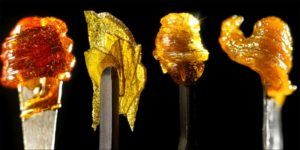
Color can range from pale gold to amber, honey, light orange, or a deeper golden brown. A darker shade does not automatically mean that the resin is old or poor quality; cultivar traits, extraction conditions, oxygen exposure, and storage can all affect color. However, an unexpectedly dark product combined with a stale smell and dry texture may suggest oxidation or age.
Texture should correspond to the product’s description. Sauce may contain a fluid terpene-rich portion surrounding crystalline material, while badder often has a whipped, creamy consistency. Sugar can appear granular and glossy. Live resin may change texture with temperature, becoming firmer when cold and more fluid when warm. This natural variation is different from separation caused by poor storage.
Watch for excessive dryness, unexplained liquid pooling, hard black particles, visible mold-like growth, or a layer that looks unlike the rest of the batch. Crystals are not automatically a defect, and small variations are normal in an unrefined extract. The key is whether the material looks clean, stable, and consistent with its stated format.
| Quality indicator | What to look for | Warning signs |
|---|---|---|
| Source material | Fresh-frozen cannabis and a named cultivar or strain | No harvest or production details |
| Aroma | Distinct, layered botanical scent matching the profile | Chemical, burnt, or artificial odor |
| Color | Clean gold, amber, or cultivar-appropriate shade | Unusually dark extract with stale smell |
| Texture | Sauce, badder, or sugar consistency that suits the label | Excessive dryness, unexplained separation, debris |
| Potency data | Batch-specific cannabinoid and terpene results | Generic percentages or unsupported claims |
| Safety testing | Residual solvent, pesticide, heavy metal, and microbial screening | Missing laboratory name or incomplete report |
| Packaging | Airtight, light-resistant, tamper-evident container | Leaking, damaged, or poorly sealed packaging |
Laboratory reports matter more than marketing
A certificate of analysis, often called a COA, is one of the strongest tools for evaluating a cannabis concentrate. The report should connect to the exact batch being sold through a matching batch number, sample name, or QR code. It should also display the testing date, laboratory identity, analytical methods, and pass or fail results.
For live resin, cannabinoid testing commonly lists THC, THCA, CBD, and other measured cannabinoids. Terpene analysis can provide useful context about aroma and cultivar expression. Safety panels are equally important. Depending on local regulations, these may include residual solvents, pesticides, heavy metals, microbial contamination, mycotoxins, and foreign matter.
Potency deserves realistic interpretation. A very high THC percentage does not necessarily mean a better experience, and laboratory variation can make small differences meaningless. A product with a balanced cannabinoid and terpene profile may offer more character than an extract marketed solely around the largest number on the label.
Check whether the report is legible and complete. A cropped screenshot showing only THC content is not enough to establish quality. Be cautious when the same report appears across multiple strains, the testing date predates the production batch by an implausible period, or the laboratory cannot be independently identified. Legal markets generally require testing and labeling standards, so buyers should follow the rules in their jurisdiction and avoid products that bypass regulated channels.
Storage protects volatile compounds
Even excellent live resin can deteriorate if it is exposed to heat, light, air, or repeated temperature changes. Terpenes are volatile, and oxidation can gradually mute aroma and alter color. A concentrate that was fresh at the time of extraction may arrive with diminished flavor if it spent too long in a hot warehouse or delivery vehicle.
A suitable container should be airtight, chemically compatible with concentrates, and resistant to light. Glass is commonly used, although the quality of the seal matters as much as the material. The package should not leak, smell strongly from the outside, or have a lid coated with residue. A tamper-evident feature can provide additional reassurance about handling.
At home, store live resin in a cool, dark location and keep the container closed except when removing a portion. Some people refrigerate concentrates, but condensation can become a problem when a cold container is opened in humid air. If refrigeration is used, allow the sealed container to reach room temperature before opening it. Keep all cannabis products away from children, pets, heat sources, and unauthorized users.
Product form should match intended use
Live resin can be purchased in several forms, and the best option depends on the equipment and experience of the consumer. Sauce often emphasizes terpene richness and may be combined with crystalline material. Badder is usually easier to portion because of its whipped texture. Sugar can be convenient for small applications but may dry out faster if left exposed to air.
For vaporization, concentrate-specific hardware with controlled temperature is preferable to improvised devices. Excessive heat can burn terpenes and create an unpleasant taste, while insufficient heat may leave material unused. A clean, compatible device also reduces the chance that old residue will distort the flavor of a new batch.
Use a small amount first, especially when the THC concentration is unknown or high. Concentrates can deliver substantially more cannabinoids per inhalation than traditional flower. Effects may vary according to tolerance, metabolism, product composition, and consumption method. Avoid driving or operating machinery after use, and do not combine cannabis with alcohol or other intoxicating substances.
A practical buying checklist
- Confirm that the product is made from fresh-frozen cannabis and has a named cultivar or batch identity.
- Review a current, batch-matched COA that includes potency, terpenes, residual solvents, pesticides, heavy metals, and microbial results where applicable.
- Assess aroma, color, and texture together instead of treating one visual feature as proof of quality.
- Choose sealed, light-resistant packaging and verify that the product has not been exposed to excessive heat or leakage.
- Purchase only through channels permitted by local law, and start with a conservative amount when using a new concentrate.
Quality live resin is best judged through consistency between documentation and sensory experience. The label should support what the eyes and nose suggest, while the laboratory report should address risks that cannot be detected at home. A beautiful golden color is encouraging, but it is only one part of the assessment.
Consumers should also consider how recently the batch was produced, how it was transported, and whether customer support can answer specific questions about testing and storage. Clear answers are a positive sign; vague claims about purity, imported origin, or extreme potency should not substitute for verifiable evidence.
Before purchasing, compare the product description with the package, COA, and applicable regulations. Select a batch with transparent sourcing, a complete safety profile, an intact seal, and a terpene expression that matches the experience you want. Use this checklist to evaluate available live resin carefully, then make a legal, informed purchase from a seller that provides enough information to support confidence in the product.