No products in the cart.
QUALITY THC PORTAL - BUY QUALITY THC PRODUCTS ONLINE - FAST DELIVERY
Welcome to Quality THC Portal. We are premium suppliers of Quality THC Products. We supply in bulk and small quantities the following products; Package weed , Pre-rolls , Vape cartridges and Marijuana concentrates. We deliver to most countries around the world and delivery is fast and secured. Our website is well encrypted to product all your information we receive to process your orders and also we have a well setup and stable customer service team who are always available to assist you incase of any difficulty while trying to make purchase on our website. We are certain you shall enjoy our services.
Best Selling Products
Sale!


CARTRIDGES
Sale!


CARTRIDGES
Sale!

CARTRIDGES
Sale!

CARTRIDGES

HASH
$
70.00
–
$
305.00

CARTRIDGES
$
25.00

CARTRIDGES
$
25.00
Sale!

CARTRIDGES
Browse our categories


our services
free express delivery
When your order is more than $299, you receive FREE express delivery and can look forward to the worlds best medical marijuana and associate products delivered directly to your door
Exquisite Collection
We’re extremely picky about product quality & our collection is constantly being refined & is comprised of the finest buds known to humankind
Top-notch Support
We pride ourselves in providing exceptional support and we’re among the few offering dedicated 24/7 chat support to our valued customers.
What RSO Is and How It Compares With Other Cannabis Concentrates
RSO is a highly concentrated cannabis oil associated with Rick Simpson, a Canadian cannabis activist who popularized a strong, full-spectrum extract. Unlike many modern vape oils or refined THC products, RSO is usually made to preserve a broad range of cannabis compounds, including cannabinoids, terpenes, pigments, waxes, and other plant material.
The oil is generally thick, dark, and intensely flavored. Its potency can vary considerably because production methods, plant genetics, extraction solvents, and post-processing techniques are not standardized everywhere. Some products called RSO are close to traditional Rick Simpson Oil, while others are more accurately described as full-extract cannabis oil or FECO.
Understanding those differences matters when comparing RSO with distillate, live resin, rosin, hash, and other cannabis concentrates. Each product has its own profile, texture, strength, flavor, and ideal use. The right choice depends on whether a consumer values maximum refinement, natural terpene content, convenience, or a broader plant profile.
What RSO Means
Rick Simpson Oil is typically a solvent-extracted cannabis oil with a high concentration of THC. Traditional recipes often use a hydrocarbon solvent, such as naphtha, although reputable commercial producers generally use regulated extraction systems and safer, tested processing methods. The resulting oil is reduced into a dense extract with a high cannabinoid content.
RSO is commonly associated with indica-dominant or THC-rich cannabis, but the label does not guarantee a particular cannabinoid ratio. Some products contain mostly THC, while others may include CBD, minor cannabinoids, or a balanced blend. Checking the certificate of analysis is more reliable than relying on the product name alone.
The term is also used loosely in the cannabis market. One producer may use “RSO” for a dark, minimally refined oil, while another may use it for a purified full-spectrum extract. For that reason, buyers should review the ingredients, extraction method, potency, and laboratory results before treating two RSO products as equivalent.
How RSO Differs From Refined Oils
The main distinction between RSO and distillate is the amount of refinement. THC distillate is processed to isolate and concentrate specific cannabinoids, often resulting in a clear or golden oil with a high THC percentage and relatively little plant material. It is frequently used in vape cartridges, edibles, and infused products because it has a consistent texture and neutral flavor.
RSO usually retains more of the original cannabis compounds. That can give it a darker color, stronger herbal taste, and thicker consistency. Its cannabinoid profile may feel more complex, although the experience depends on the strain, terpene content, dose, and individual response. A high THC percentage does not automatically mean a better or more suitable product.
FECO is another closely related term. Full-extract cannabis oil is generally intended to retain a broad spectrum of cannabis compounds, and many FECO products resemble RSO in appearance and potency. The difference often comes down to terminology, extraction practices, and the producer’s formulation rather than a universally enforced definition.
RSO Compared With Other Concentrates
Cannabis concentrates vary according to how they are extracted and what compounds are preserved. Live resin is made from freshly harvested, flash-frozen cannabis, which helps retain volatile terpenes and produces a strong aroma. Rosin is made without chemical solvents by applying heat and pressure to cannabis flower or hash. Both are often valued for flavor and a vivid terpene profile.
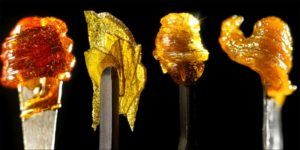
Hash and hash oil cover a broad range of products. Traditional hash is compressed or collected resin glands, giving it a firm or pliable texture. Hash oil is a more general term for oil-based cannabis extracts and may include products with very different levels of refinement. Wax, shatter, crumble, and budder describe textures rather than one fixed chemical formula.
The chart below offers a practical comparison. Exact strength and composition can differ between brands, so product-specific testing remains important.
| Product | Typical texture and appearance | Main characteristics | Common formats |
|---|---|---|---|
| RSO | Thick, dark, sticky oil | Full-extract profile, strong THC content, intense herbal flavor | Syringes, capsules, edibles |
| Distillate | Clear to amber, smooth oil | Highly refined, consistent potency, mild flavor | Vape cartridges, edibles, tinctures |
| Live resin | Glossy, soft, aromatic concentrate | High terpene content from fresh-frozen cannabis | Dab jars, cartridges, infused products |
| Rosin | Sticky, golden to dark, pressed concentrate | Solventless extraction with pronounced flavor | Dabs, edibles, infused flower |
| Hash | Firm, crumbly, or pliable resin | Concentrated trichomes with traditional processing | Hand-pressed pieces, bowls, joints |
| Wax or shatter | Soft, brittle, or glass-like | Concentrated extract with texture-specific processing | Dab rigs, vaporizers, infused products |
| Flower or pre-roll | Dried plant material | Lower concentration, familiar combustion experience | Joints, cones, pipes |
For shoppers who prioritize ready-to-use formats, pre-rolls can offer a simpler alternative to thick oils or dab concentrates. They are portioned, portable, and consistent when produced with quality flower; this overview of pre-roll convenience explains why some consumers prefer them for straightforward use.
Potency, Effects, and Consumption
RSO is often much stronger by volume than cannabis flower. Because the oil is dense and concentrated, a small amount may contain a substantial quantity of THC. New or infrequent consumers should treat it as a high-potency product and avoid assuming that a tiny-looking portion is automatically a low dose.
How RSO is consumed makes a major difference. Many products are intended for oral use, either directly, in capsules, or as an ingredient in an edible. Oral THC can take considerably longer to take effect than inhaled cannabis and may last longer. Taking additional product too soon can lead to an unexpectedly intense experience.
RSO should not automatically be placed in a vape cartridge or dab device. Its thick texture, plant compounds, residual oils, and formulation may be unsuitable for inhalation equipment. Only use a product by the route stated by the manufacturer, and never assume that an oil designed for oral use is appropriate for vaping.
Cannabis may cause drowsiness, impaired coordination, anxiety, dry mouth, or changes in attention. It can interact with alcohol, sedating medicines, and some prescription drugs. People who are pregnant, nursing, managing a medical condition, or taking medication should speak with a qualified healthcare professional before using THC products. Cannabis products should also be kept away from children and pets.
Evaluating Quality and Lab Testing
A reliable RSO product should have clear labeling, a batch number, an ingredients list, and accessible laboratory results. A certificate of analysis may show THC, CBD, minor cannabinoids, terpene levels, and screening for contaminants such as pesticides, heavy metals, mold, and residual solvents. Results should correspond to the exact batch being sold rather than a generic report.
Color alone does not establish quality. Dark oil may reflect a full-extract process, oxidation, plant pigments, or heat exposure, while lighter oil may be more refined. A thick texture can be normal for RSO, but separation, an unusual chemical smell, leaking packaging, or missing product information should prompt caution.
Packaging should protect the oil from heat, light, and air. A sealed syringe or container with a tamper-evident closure is preferable to an improvised jar. Storage instructions vary, but a cool, dark location is generally more suitable than a sunny windowsill or warm vehicle. Keep the package closed and clearly labeled.
Legal requirements differ by location, and international shipping claims do not guarantee that a product can lawfully enter every destination. Buyers should verify local rules covering THC concentration, possession, importation, and delivery. A product may be permitted where it is sold yet restricted where it is received.
Selecting the Right Concentrate
Choosing between RSO and another extract begins with the intended experience and preferred format. Someone seeking a strong, full-spectrum oil may consider RSO or FECO. A consumer who wants a neutral-tasting ingredient for an edible may prefer distillate. Someone focused on aroma and strain character may find live resin or rosin more appealing.
Convenience also matters. RSO can be economical because a small quantity contains significant THC, but its sticky texture and strong taste may be inconvenient. Cartridges offer discreet inhalation, although their quality depends on hardware, oil formulation, and testing. Flower and pre-rolls are easier to recognize and portion visually, but they produce a lower concentration and require smoking or vaporization.
Price should be compared by verified cannabinoid content rather than package size alone. A larger syringe is not necessarily better value if the potency is low or the product lacks independent testing. Buyers should also distinguish between total THC in a package and THC per serving, particularly with capsules, tinctures, and edibles.
Practical Buying Checks
A short checklist can help separate a well-documented concentrate from an unclear listing:
- Confirm whether the oil is intended for oral use, inhalation, or another specific format.
- Review the batch-specific certificate of analysis and check the date, potency, and contaminant screens.
- Compare total cannabinoid content, serving size, and price instead of judging value by volume.
- Look for sealed, child-resistant packaging with ingredients, storage information, and a batch identifier.
- Start with a conservative amount and allow sufficient time for effects before considering any additional THC.
RSO can be a useful option for experienced cannabis consumers who want a concentrated, full-extract product, but it is not interchangeable with every cannabis oil. Distillate emphasizes refinement and consistency, live resin emphasizes fresh terpene expression, rosin emphasizes solventless processing, and hash preserves a more traditional resin format. RSO occupies its own space because it combines high potency with a dense, plant-rich profile.
Review product documentation carefully, choose a format that matches the intended method of use, and purchase only from a source that provides transparent testing and secure packaging. Explore carefully labeled cannabis concentrates and compare their cannabinoid profiles before making an informed choice.