No products in the cart.
QUALITY THC PORTAL - BUY QUALITY THC PRODUCTS ONLINE - FAST DELIVERY
Welcome to Quality THC Portal. We are premium suppliers of Quality THC Products. We supply in bulk and small quantities the following products; Package weed , Pre-rolls , Vape cartridges and Marijuana concentrates. We deliver to most countries around the world and delivery is fast and secured. Our website is well encrypted to product all your information we receive to process your orders and also we have a well setup and stable customer service team who are always available to assist you incase of any difficulty while trying to make purchase on our website. We are certain you shall enjoy our services.
Best Selling Products
Sale!


CARTRIDGES
Sale!


CARTRIDGES
Sale!

CARTRIDGES
Sale!

CARTRIDGES

HASH
$
70.00
–
$
305.00

CARTRIDGES
$
25.00

CARTRIDGES
$
25.00
Sale!

CARTRIDGES
Browse our categories


our services
free express delivery
When your order is more than $299, you receive FREE express delivery and can look forward to the worlds best medical marijuana and associate products delivered directly to your door
Exquisite Collection
We’re extremely picky about product quality & our collection is constantly being refined & is comprised of the finest buds known to humankind
Top-notch Support
We pride ourselves in providing exceptional support and we’re among the few offering dedicated 24/7 chat support to our valued customers.
Spotting diluted or cut vape cartridge oil before your next session
The Australian market for vaporiser cartridges has grown quietly but steadily, propelled by the legal prescription pathway administered through the Therapeutic Goods Administration, alongside a much larger grey market that relies on overseas mail and local courier services. In capital cities from Sydney to Melbourne, Brisbane, Perth and Adelaide, consumers are buying 510-thread carts from a mix of dispensaries, online retailers operating under the SAS-B scheme, and informal channels. With that variety comes a real risk: a surprising number of cartridges on the market have been diluted with cutting agents, terpenes borrowed from unrelated plants, or synthetic cannabinoids that mimic the active ingredient without delivering the same effect.
Cutting a cartridge is profitable for whoever sits between the cultivator and the consumer. A single gram of authentic distillate can be extended with thinning liquids, flavourings, or low-grade hemp oil to produce two, three, or even four grams of saleable product. The buyer ends up with a cart that looks the part, hits weakly, burns out quickly, and sometimes carries substances that have never been tested for inhalation. Knowing how to identify a compromised cartridge before you load it onto a battery is a practical skill every Australian vaper should build, especially with local customs regularly intercepting suspicious imports at the Sydney and Melbourne mail centres.
Why dilution is so common in cartridge oil
Cutting agents are cheap, colourless, and behave a lot like real distillate when they sit in a glass or plastic chamber. Common fillers include propylene glycol, vegetable glycerine, medium-chain triglyceride oil, and various terpene blends derived from botanical sources other than the strain advertised on the label. A few dishonest producers even use synthetic cannabinoids sprayed onto a carrier liquid, then package the result in hardware that imitates well-known labels, sometimes with batch numbers copied from real certificates of analysis.
The economics make the practice attractive. A licensed producer in Canada or the United States might sell a gram of properly winterised distillate for twenty to forty Australian dollars at wholesale. A bulk order of thinning agent from an industrial chemical supplier costs a fraction of that. Once the cart is filled, sealed and packaged in a colourful box with strain branding, the markup dwarfs the original input cost. The Australian consumer usually pays between sixty and one hundred and twenty dollars for a single gram cart, which leaves plenty of room in the supply chain for a cut to be applied without the buyer's knowledge.
Visual inspection: what authentic oil should look like
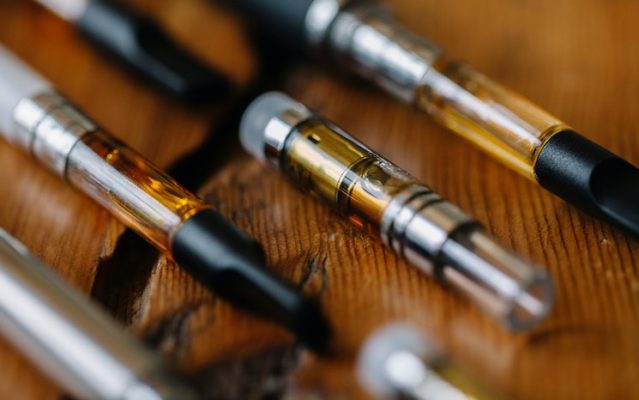
A genuine full-spectrum or distillate cartridge oil tends to be one of three shades: pale gold, amber, or a deeper honey colour. Live resin carts lean slightly darker because they preserve more of the plant's natural pigments. The hue should be consistent from one end of the chamber to the other. Cloudiness, separation, or floating bubbles are warning signs. If the oil looks like it has water inside it, or if a clear layer sits above a coloured layer, the cartridge has likely been blended with a water-soluble additive or has been stored so poorly that moisture has crept in.
Hold the cart up to a strong light and tilt it gently. Authentic distillate moves slowly and clings to the glass. Cut oil often runs faster, almost like vegetable oil, and leaves a thin film on the chamber wall that drains back into the reservoir in seconds rather than minutes. Watch for tiny crystals near the bottom as well. Some natural distillates do form THCA crystals over time, but a sudden shower of crystals in a fresh cart usually signals that something has been added to force precipitation. Comparing a suspect cartridge against a known-good example from a transparent retailer is the fastest way to train your eye.
Viscosity and flow behaviour under gentle heat
The way oil moves inside the chamber tells you a lot about what is inside it. Real distillate has a specific gravity close to 0.9 and behaves like a slightly runny syrup at room temperature. If you hold the cart between your fingers for thirty seconds, the warmth should make the oil glide a little faster, but it should still feel substantial. Heavily cut oil becomes noticeably thin under mild warmth, almost like the liquid inside an e-cigarette tank.
You can perform a simple home flow test without even firing the device. Remove the mouthpiece, place a small piece of parchment paper on a flat surface, and let a single drop fall from the airway onto the paper. Authentic oil will sit as a compact droplet that takes a while to spread. Thinned oil will run quickly into a wide wet circle, and any oily ring left behind after the liquid evaporates is a strong indicator that a non-cannabis carrier has been added. The paper method works best in a warm room, so try it on a Sydney or Brisbane summer afternoon rather than during a cold Melbourne evening.
Aromatics, flavour, and what your nose tells you
A genuine cartridge carries the dominant terpenes of the strain it claims to represent: limonene for citrus-leaning sativas, myrcene for earthy indicas, pinene for sharp and piney profiles. The aroma should be present as soon as you break the seal, and it should match the strain name on the packaging. Cut cartridges often smell of generic candy, fruit punch, or nothing at all, because the natural terpene fraction has been replaced by a bottled botanical blend that smells closer to a scented candle than to cannabis.
When you do take a small pull, the flavour should arrive immediately and taper gradually. A burnt, chemical, or plasticky taste suggests the coil is running too hot because the oil has thinned and is wicking too freely, or that the cartridge contains residual solvents from a poorly purged extraction. A taste that disappears within a second or two, leaving nothing on the palate, often points to a product where the active ingredient has been replaced by a synthetic sprayed onto a flavour base. Your sense of smell is one of the cheapest and most reliable instruments in the Australian consumer's toolkit, especially when the alternative is a paid lab test.
Hardware clues from the chamber, coil, and mouthpiece
Genuine cartridges are built around a ceramic or cotton wick that sits inside a defined chamber, with a precisely measured amount of oil surrounding it. Cheap imitations often use oversized chambers that hold more liquid than the wick can vapourise, which is why many cut carts flood the airway and gurgle on the first draw. If you can see daylight through the oil when you hold the cart to a window, the chamber is under-filled or the oil has been thinned past the point where the wick can keep up.
The mouthpiece itself is worth a close look. Authentic brands use food-grade silicone, ceramic, or medical-grade metals. Counterfeit hardware sometimes uses plastic that softens under heat, or rubber that smells faintly of chemicals when warmed. Press the mouthpiece gently with a fingernail; if it dents or flexes, the cart may have been assembled with the same cost-cutting mindset that produced the oil inside. The threading on a 510 connection should be smooth and uniform. Bumpy, loose, or sticky threads are another sign that the cart was assembled quickly, possibly in a kitchen rather than a regulated facility.
Lab testing, certificates of analysis, and how to read them
A reputable seller publishes a certificate of analysis for every batch, issued by an accredited third-party laboratory. In Australia, accredited labs typically appear on the National Association of Testing Authorities register, and many international producers publish results from labs certified to ISO 17025. The certificate should list the cannabinoid percentage by weight, a terpene profile if claimed, and a panel of contaminants including heavy metals, pesticides, residual solvents, and microbial content. If any of those panels is missing, the cart has not been properly tested.
Cross-check the batch number printed on the certificate against the one printed on the cartridge and its packaging. Honest producers print the same batch on every layer of the product. Dishonest ones recycle old batch numbers or skip them entirely. The cannabinoid percentage on a genuine distillate cart usually sits between 80 and 95 percent, and a live resin cart typically runs lower because it retains waxes and lipids. A certificate that claims 99 percent purity on a live resin product, or that lists a contaminant panel with no detectable values at all, deserves a sceptical eye.
Practical recommendations when sourcing cartridges in Australia
- Buy from sellers who publish batch-specific certificates of analysis from NATA-accredited or ISO 17025-certified facilities.
- Inspect the oil for colour consistency, slow flow, and a clear lack of separation before attaching the cartridge to a battery.
- Cross-reference strain aroma against the terpene profile listed on the certificate and on the retailer's product page.
- Avoid carts with unusually low price points, missing batch information, or hardware that feels flimsy, leaks, or threads poorly.
- Store carts upright in a cool, dark place; Australian heatwaves can accelerate the breakdown of thinned oils and exaggerate quality flaws.
- Report suspected counterfeit or unsafe cartridges to the TGA's online reporting portal and to your state health authority if adverse effects occur.
Real cartridge oil is dense, aromatic, consistent in colour, and backed by a certificate you can actually verify. Anything thinner, weaker, or stranger than that deserves a second look before it touches your lungs. Browse the live inventory and lab-tested selections on the Quality THC Portal to compare what a properly prepared cart looks and feels like, then apply those same standards to whichever retailer you choose to support in Sydney, Melbourne, Brisbane, Adelaide, Perth, or anywhere else across the country.